Guest post by Yasmina Seifeddine. Yasmina is an artist, archival researcher, and witness exploring the limits and possibilities of cultural work in anti-colonial struggle.
Many people living within diasporic, displaced, or marginalised communities experience an undeniable desire to return – often feeling distant from the homelands, stories and relationships that help us explain where we are and what comes next. We’re left with “unfinished business“, in Mamadou Diallo’s words, a need to return to our ancestors and a desire to tend their dreams, lands and infrastructures.
This need to bridge a distance brought me to Platform’s Archive as Catalyst grant programme in the spring of 2025.
For years, I had wanted to learn about my great grandfather and his role deterring French imperialism in Syria. But I didn’t want to confine my learning to an academic paper, teach-in or visual ode. This had to be a devotional engagement that I undertook as a cultural producer and an organiser and a researcher. I arrived at Platform with the idea of a speculative letter-writing project and we turned my immaterial longing into a material project.
Cultivating Homeland(ing) borrows the second part of its name from Kali Rubaii’s description of repair work and return in Iraq, which inspired a desire to think of liberation both speculatively and materially. I started from the metaphor of a postage stamp, based on my painting ‘An Invitation Towards Tahreer // transiting between worlds’, and worked backwards from there to letter-writing as an embodied and revolutionary form. I wanted to experiment in bridging the space between tactile materials and decolonial worldbuilding, between the intimate and the infrastructural. From here, I worked closely with Platform and Slow & Dirty Press at House of Annetta to design a letter-writing template, stamps and prompts.
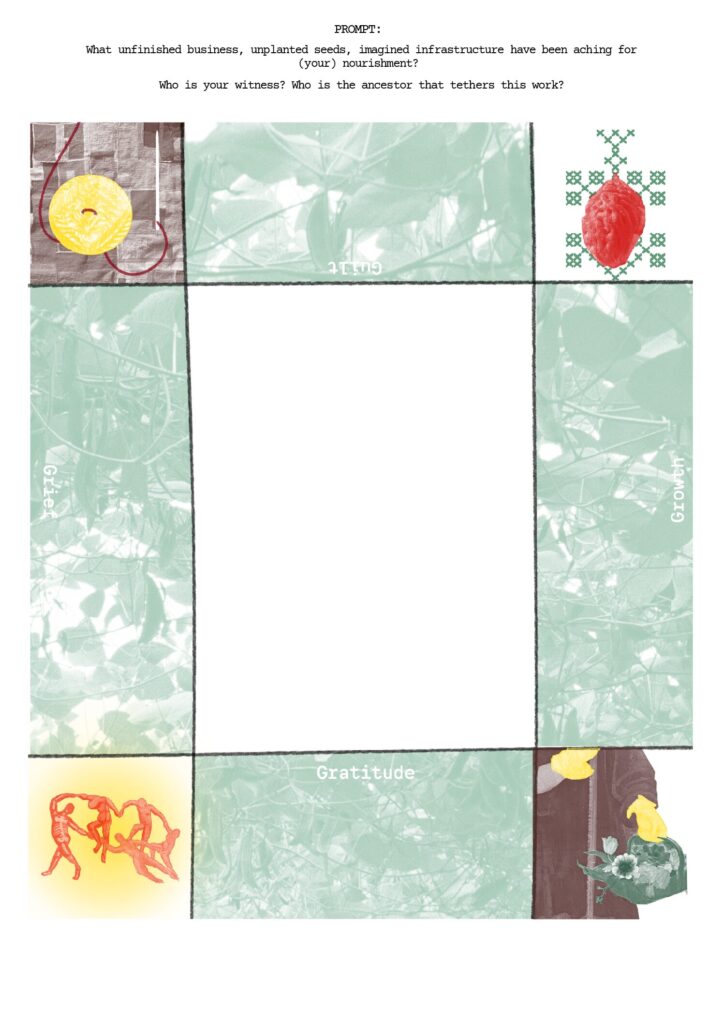
So much troubleshooting, translation and experimentation went into the creation of these materials. They are intended as both a provocation to dream and a practical resource. The letter page template above was designed to frame participants’ writing within our shared prompts, while also inviting people to write and draw as they wished. Acting as visual talismans, each corner of the letter template is filled with symbols of cultivation, interdependence and repair.
Weaving embodies healing and growth. The button, thread and needle are metaphors for mending and the reproductive work necessary to maintaining our inherited worlds.
An apricot seed intermingled with the tatreez pattern for an ear of corn symbolise abundance and endless possibilities.
Matisse’s La Danse nods to circularity, rehearsal, and joyful commitment to the collective.
Augustus John’s gardening heroine, her full harvest of flowers and her tools invites us to think of liberation as an ongoing process.
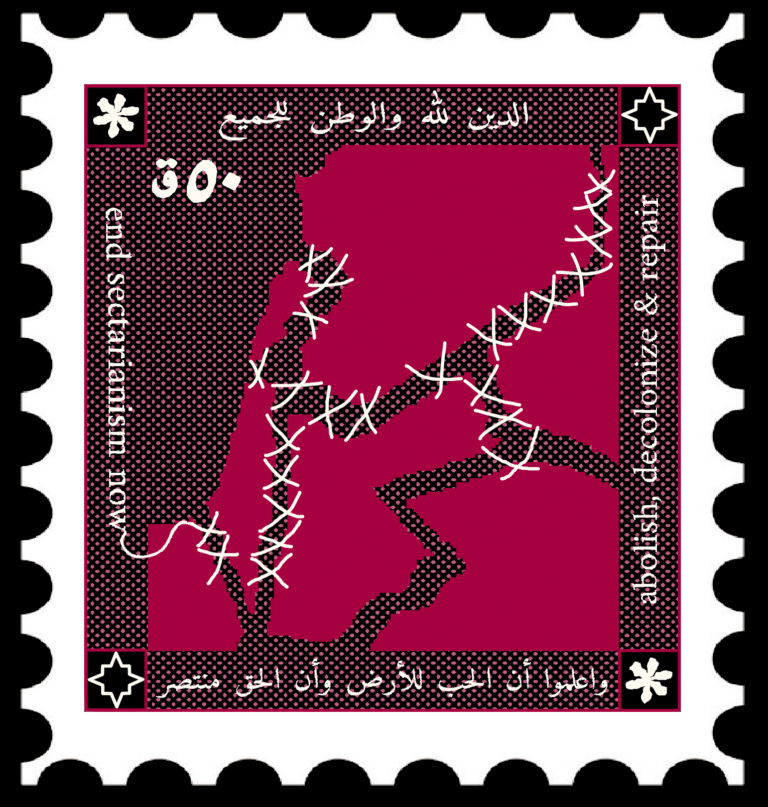
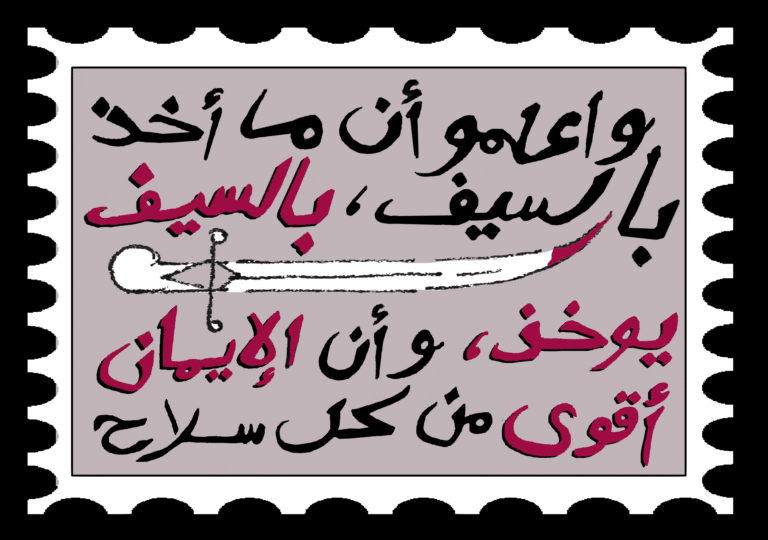
The stamps are composed of Arabic text sampled from my great grandfather’s words and writing on repair and unity.
The stamp above, to the left, shows the borders in Al-Sham as chasms woven together. The line of text at the top is my great grandfather’s revolutionary and anti-sectarian slogan, which translates roughly as “Religion is for God, the homeland is for all.” The bottom line is paraphrased from his Will and acts as a reminder for the people: “And just know, that love is for the earth, and the truth is victorious”. Our right to homelands will always overcome and precede colonisation.
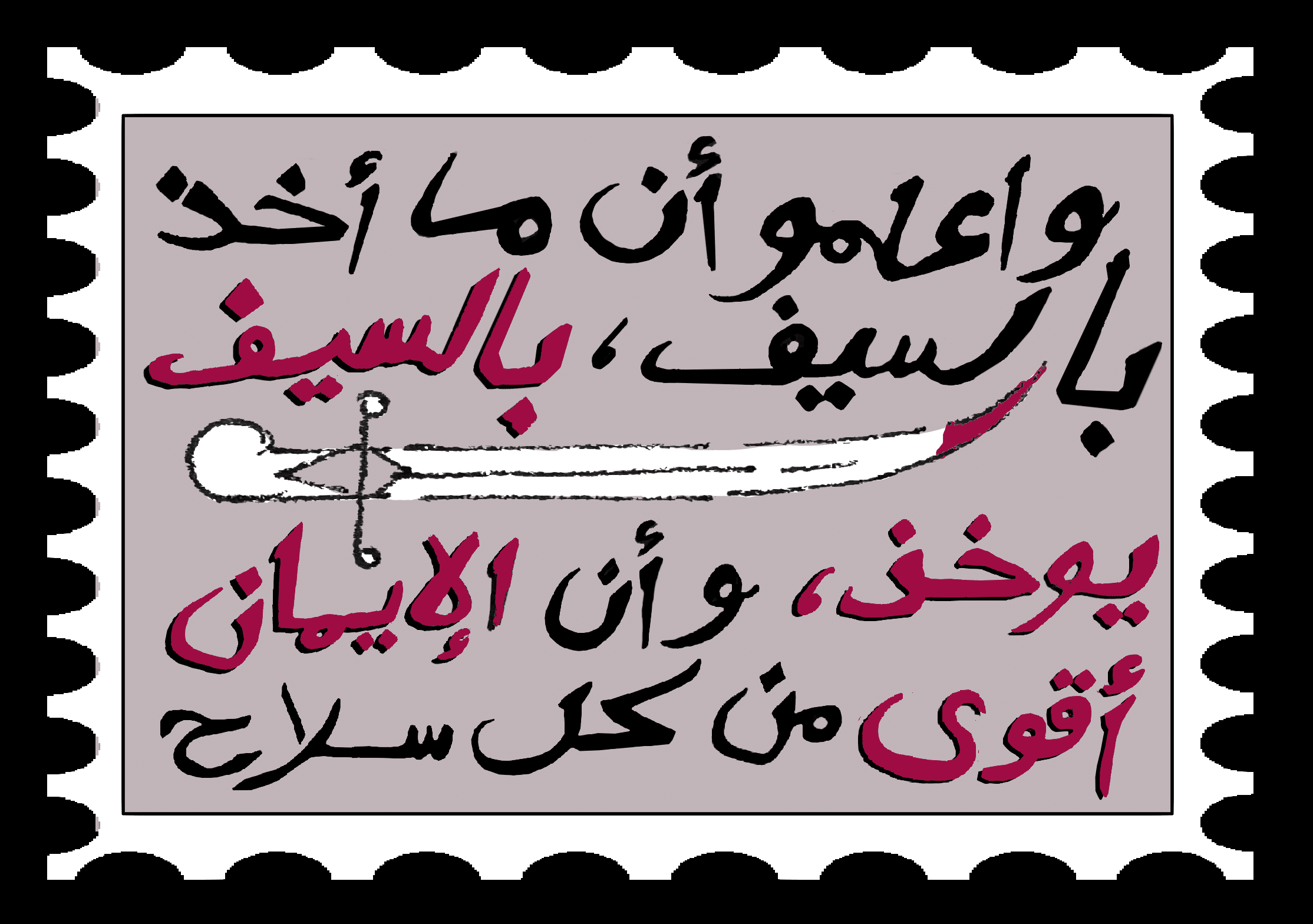
The second stamp centers another sample from my great grandfather’s Will and embodies the struggle of resistance against colonial forces: “And know that, what is taken by by sword, must be taken back by sword, and that faith is stronger than any weapon”. Faith here doesn’t refer to religion, but belief in one another and our shared cause.
The materials are shared here in the same spirit of openness with which we organised the workshop. You can download letter template, first stamp, second stamp and tend to your own ancestors, seeds and dreams.
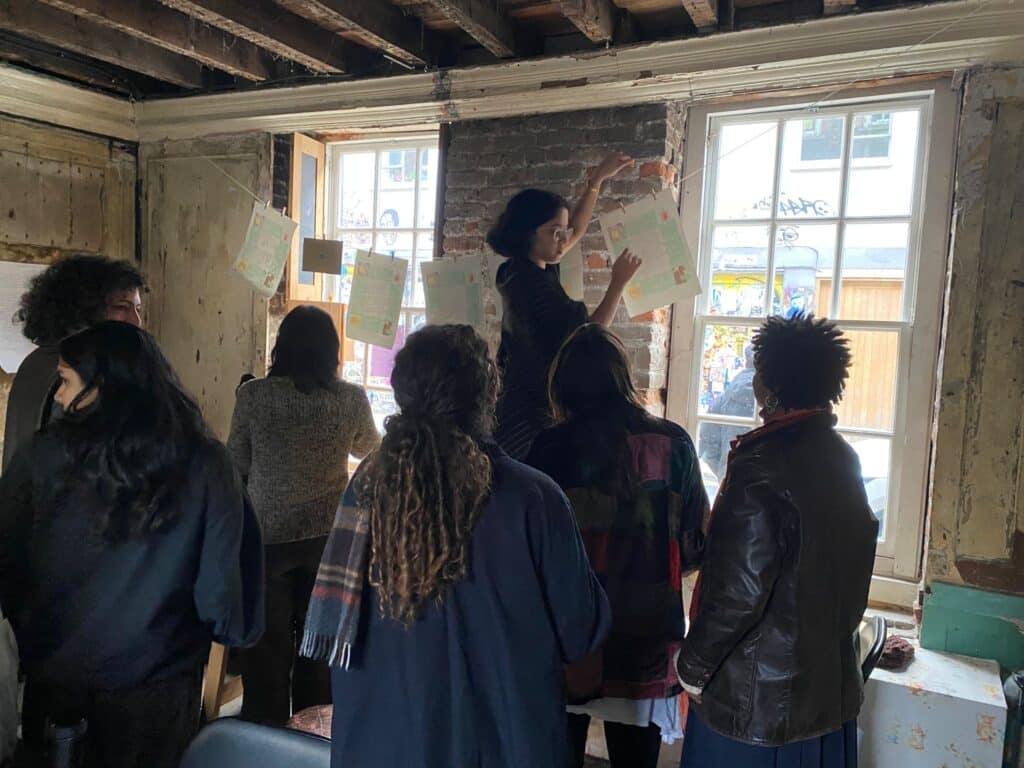
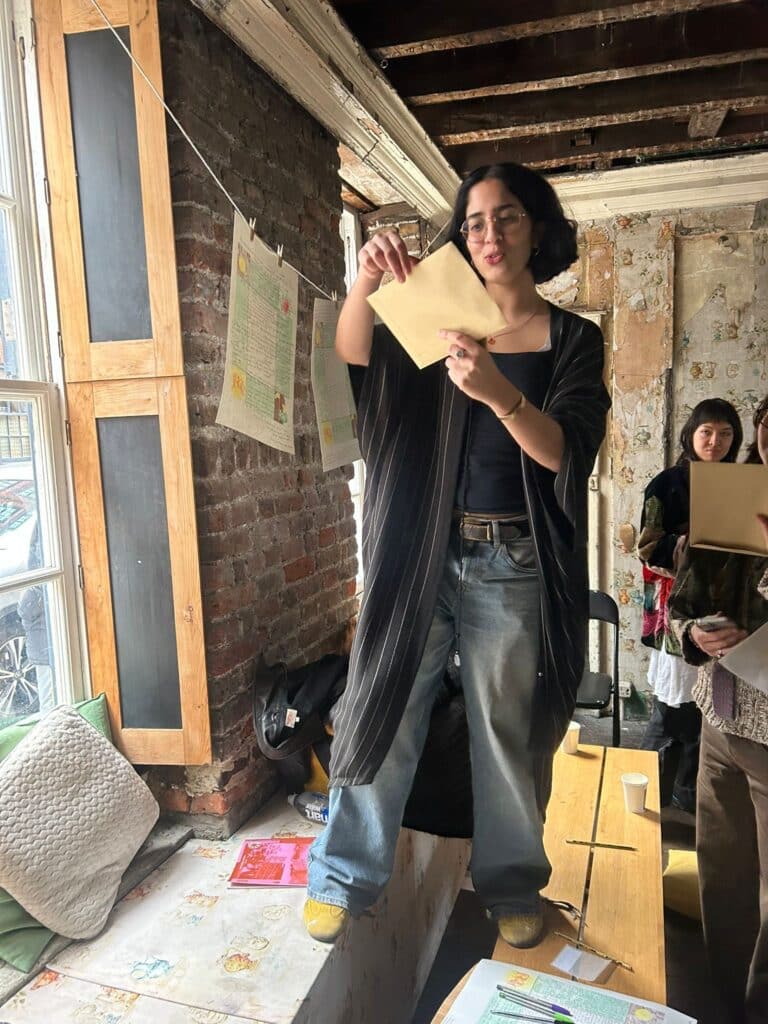
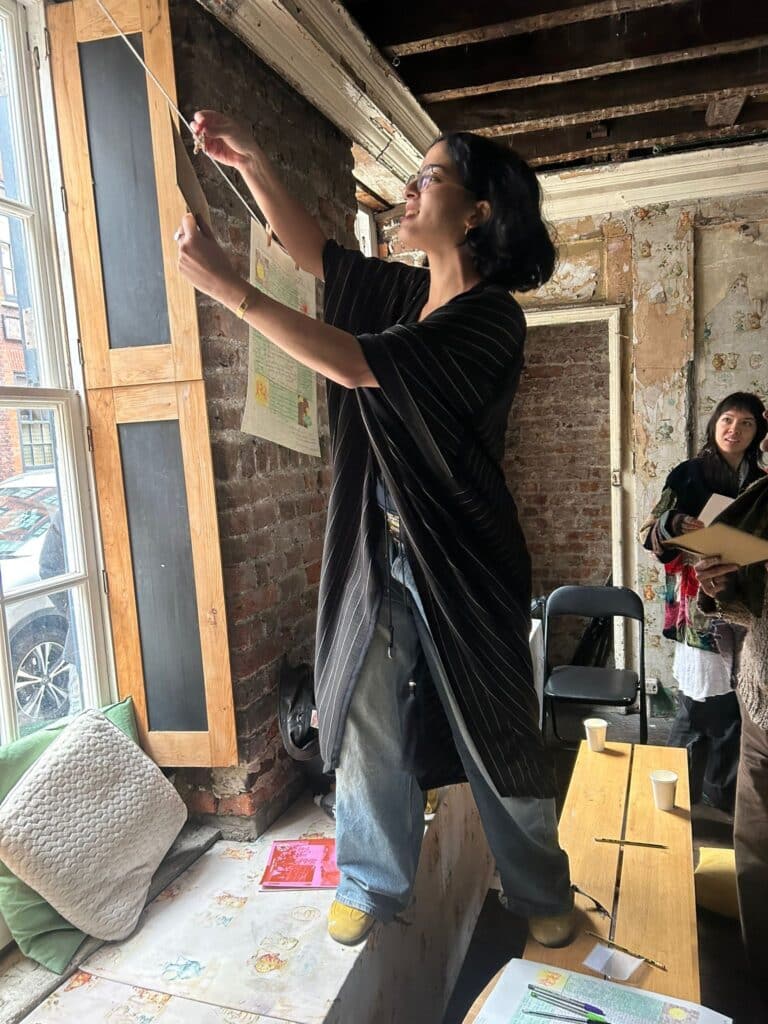
The most special part of this project was seeing it come to life in the workshop. Participants brought with them diverse experiences, reflections and skillsets, creating a rich and grounded gathering. So many beautiful moments were shared in (the making of) the workshop. You can read more about it, the different phases of the project and details about the material experimentation here.